

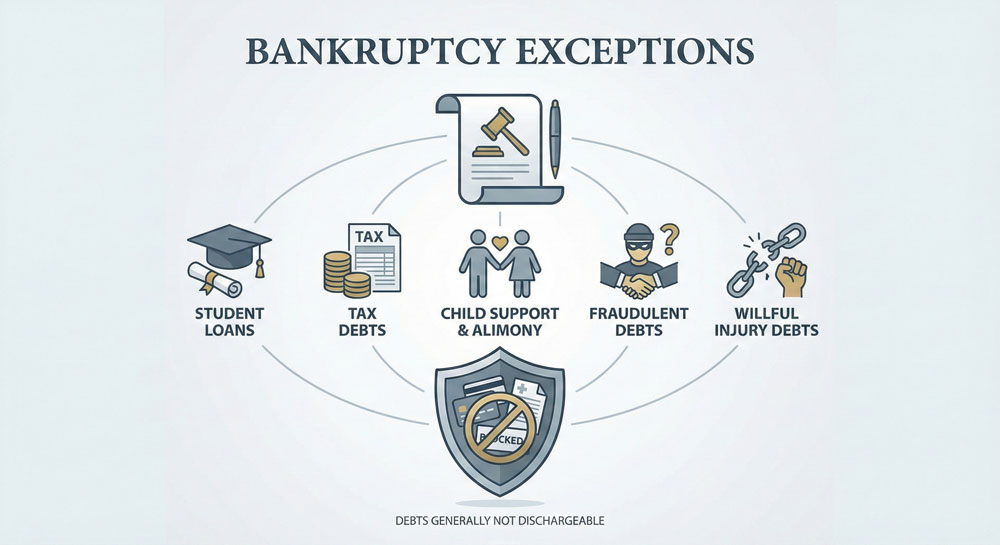

Bankruptcy is a legal process that can provide individuals and businesses with relief from overwhelming debt. However, not all debts can be discharged in bankruptcy. There are certain exceptions that exist in the bankruptcy code which means that certain debts cannot be eliminated through bankruptcy. In this blog post, we will discuss bankruptcy exceptions and what debts they apply to.
Student Loans
Student loans are generally not dischargeable in bankruptcy, except under extreme circumstances. In order to have student loan debt discharged, the debtor must prove that repayment of the debt would impose an undue hardship on them and their dependents.
Taxes
Certain types of tax debts are nondischargeable in bankruptcy. Taxes that were due within the last three years, as well as any taxes that were assessed within the last 240 days, cannot be discharged in bankruptcy. Additionally, taxes that were not filed or were fraudulently filed are not dischargeable.
Child Support and Alimony
Child support and alimony are non-dischargeable in bankruptcy. These debts are considered priority debts, meaning they are given a higher level of importance than other types of debts. If you owe child support or alimony, these debts will need to be paid off outside of bankruptcy.
Debts Incurred Through Fraud or Illegal Activity
Debts Incurred Through Fraud or Illegal Activity: Debts that were incurred through fraud or illegal activity cannot be discharged in bankruptcy. This includes debts that were obtained through false pretenses or misrepresentation, as well as debts that were incurred through embezzlement, larceny, or breach of fiduciary duty.
Debts Arising From Willful or Malicious Injury
Debts Arising From Willful or Malicious Injury: Debts that were caused by willful or malicious injury to another person or property are not dischargeable in bankruptcy. This includes debts that were incurred as a result of intentional acts of harm, such as assault or battery.
What If a Debt Is Nondischargeable?
It’s important to note that even if a debt is nondischargeable in bankruptcy, it does not mean that the debtor will be responsible for the entire amount owed. In some cases, the debtor may be able to negotiate a repayment plan or settle the debt for less than the full amount owed.
Conclusion
In conclusion, bankruptcy can be a useful tool for individuals and businesses struggling with overwhelming debt, but it’s important to understand that not all debts can be discharged through bankruptcy. By understanding the exceptions to bankruptcy, debtors can better prepare themselves for the bankruptcy process and make informed decisions about their financial future.
Contact a Fresno Bankruptcy Attorney
For more information, reach out to your Fresno bankruptcy attorney at 559-218-5324.